Breast Cancer and Menopause: What Every Survivor Deserves to Know
Every October, the world turns pink, and the message is clear: get your mammogram, catch it early, fight. All of that matters. But in my office, I meet the women who come after the ribbons, the ones who finished treatment and are now asking a quieter, harder question: what happens to the rest of my life?
For many breast cancer survivors, part of the answer is menopause. Sometimes it arrives abruptly because of chemotherapy or surgery. Sometimes it is triggered or intensified by the medications that protect against recurrence. And sometimes it simply arrives on schedule, because the average woman is diagnosed in her early sixties and many are diagnosed in their forties and fifties, right in the middle of the transition.
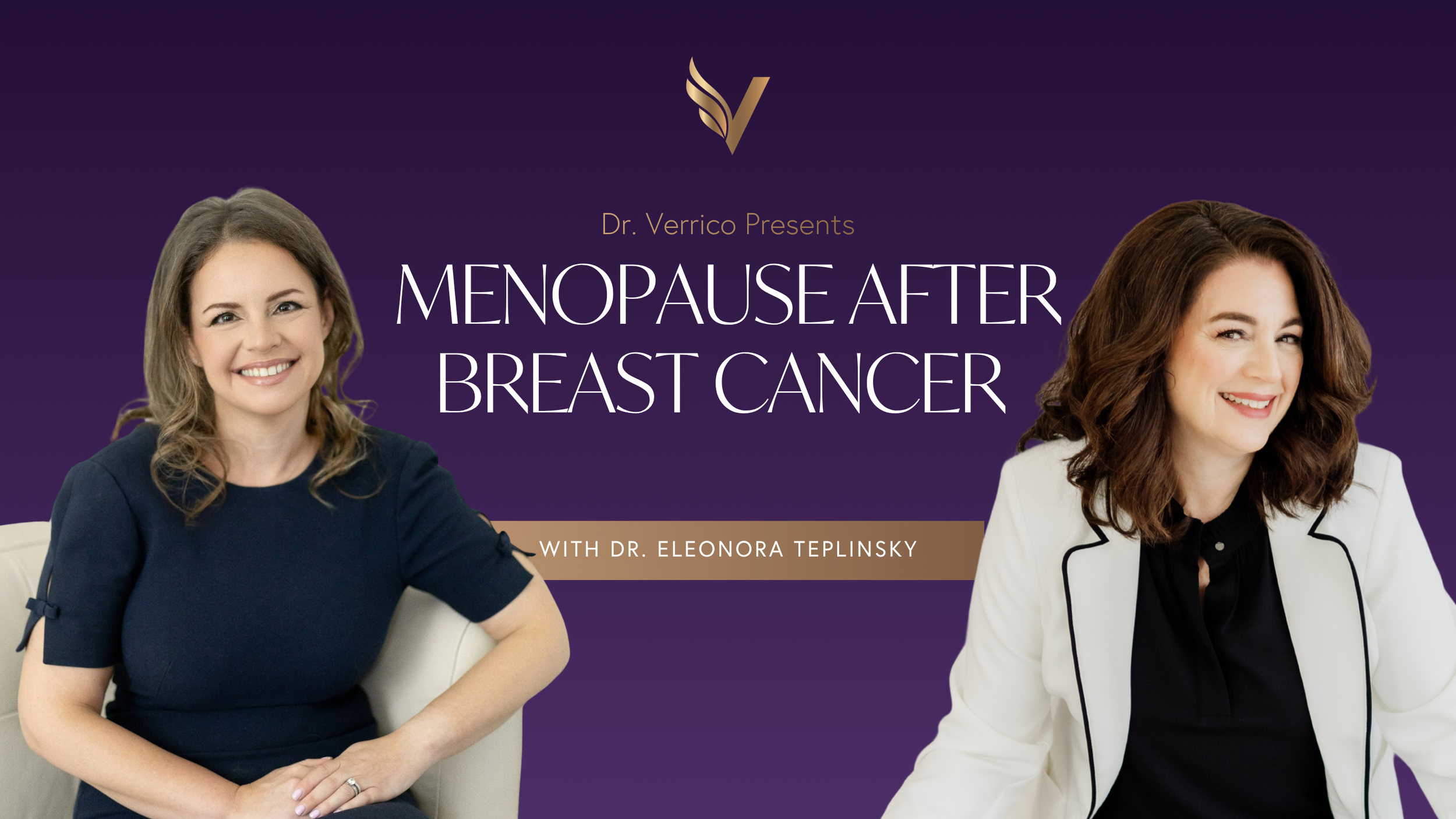
This month I had the privilege of sitting down with Dr. Eleonora Teplinsky, head of breast and gynecologic medical oncology at Valley-Mount Sinai Comprehensive Cancer Care and author of the new book Beyond the Pink: Navigating Life, Health, and Breast Cancer. Our conversation, which you can watch in full on my YouTube channel, reinforced something I believe deeply: a history of breast cancer changes your menopause plan. It does not take away your right to have one.
Why Breast Cancer Changes the Menopause Conversation
Menopause is fundamentally a story about estrogen. As ovarian estrogen production falls, women can experience hot flashes, night sweats, sleep disruption, mood changes, joint pain, vaginal dryness, and accelerated changes in bone and cardiovascular health.
Breast cancer treatment can compress that story into weeks instead of years.
Chemotherapy can stop the ovaries from functioning, either temporarily or permanently, especially in women over 40.
Ovarian suppression or removal produces what is called surgical or medical menopause, with an abrupt drop in hormones.
Endocrine therapy (tamoxifen or aromatase inhibitors such as anastrozole, letrozole, and exemestane) is prescribed for hormone receptor positive breast cancer, which makes up the majority of cases. These medications are protective. They also commonly cause hot flashes, joint aches, and vaginal symptoms, and aromatase inhibitors in particular accelerate bone loss.
The result is that many survivors experience menopause more suddenly and more intensely than their peers, at the same time they are being told that the most widely discussed treatment, systemic hormone therapy, is generally off the table for them.
You Are Not Doomed Without Hormones
Right now we are living through what I would call a menopause moment. Women are talking openly about hormone therapy, and that is a wonderful thing. But as Dr. Teplinsky pointed out in our conversation, that moment can leave breast cancer survivors feeling left behind, as if the message is "hormones or nothing."
I want to be very clear: that is not the message. Even for women who can safely use hormone therapy, estrogen is not a magic fix. It will not undo poor sleep, nightly wine, a sedentary routine, or unmanaged stress. Dr. Teplinsky described caring for women decades past a diagnosis in their thirties or forties who never took hormones and are thriving, because they move, eat well, sleep, stay connected, and stay proactive about their care.
Hormone therapy is one tool in the toolbox. For survivors, we simply reach for different tools.
Non-Hormonal Treatment for Hot Flashes
Hot flashes and night sweats (called vasomotor symptoms) are among the most common reasons women stop taking their endocrine therapy early, and stopping early can increase the risk of recurrence. Treating these symptoms is not a luxury. It is part of cancer care.
Effective non-hormonal options include certain antidepressants (low-dose SSRIs and SNRIs, chosen carefully because some interact with tamoxifen), gabapentin, and oxybutynin, along with cognitive behavioral therapy and clinical hypnosis, which have good evidence behind them.
The newest category works directly on the brain's temperature control center. Elinzanetant (Lynkuet) is a once-daily, hormone-free medication approved in the United States in 2025 for menopausal hot flashes. It was also studied specifically in women taking endocrine therapy for hormone receptor positive breast cancer in a large trial called OASIS-4, where it significantly reduced the frequency and severity of hot flashes. That indication is already approved in Canada, the United Kingdom, and the European Union, and in late September 2026 the FDA granted priority review for the same use here. Fezolinetant (Veozah), a related medication, is another option for some women, though it requires liver monitoring.
Which option fits depends on your medications and history, but options exist.
Vaginal Dryness, Painful Sex, and Recurrent UTIs
This is the conversation I most want survivors to have, because it is the one most often shut down.
Estrogen loss thins the tissues of the vagina, vulva, and urinary tract. This is called genitourinary syndrome of menopause (GSM), and unlike hot flashes, it does not improve with time. It tends to worsen. Symptoms include dryness, burning, tightness, pain with intercourse, urgency, and recurrent urinary tract infections. As Dr. Teplinsky noted, some women never notice dryness at all; they simply have three UTIs in six months.
Non-hormonal vaginal moisturizers, lubricants, and hyaluronic acid products are a good first step, and pelvic floor physical therapy can help with pain and tightness. But when those are not enough, low-dose vaginal estrogen is often the most effective treatment, and for many survivors it is a reasonable option.
Here is why. Vaginal estrogen acts locally, with very little absorbed into the bloodstream once the tissue has healed. Large observational studies, including a 2024 study in JAMA Oncology of nearly 50,000 women with breast cancer, have not found an increase in breast cancer deaths among those using vaginal estrogen. A 2022 Danish study did find a higher recurrence risk in a subgroup of women taking aromatase inhibitors, though not an increase in mortality, and that study has important limitations, which Dr. Teplinsky unpacks in her book. The American College of Obstetricians and Gynecologists and The Menopause Society both support vaginal estrogen as an option for survivors whose symptoms do not respond to non-hormonal therapy, through shared decision-making with the oncology team.
Vaginal DHEA (prasterone) is another local option that has not been shown to meaningfully raise circulating estrogen. Cost and access are often the bigger barriers.
You deserve to be comfortable in your own body, and a provider who will discuss these options rather than offering a reflexive no.
The Evolving Conversation About Testosterone
Testosterone in women with a breast cancer history has long been considered off limits, and the evidence base is still limited. But the conversation is shifting. In our interview, Dr. Teplinsky shared that national oncology guidance has recently softened from treating testosterone as contraindicated to allowing its use with caution, and that she is increasingly comfortable using it in selected hormone receptor positive patients, where laboratory research suggests androgens may actually have a tumor-suppressing effect. For some of her patients, it has improved libido, mood, and quality of life enough that they can stay on the endocrine therapy that protects them.
This is a highly individualized decision that requires your oncologist at the table. But it is a decision, not a closed door.
Protecting Your Bones, Heart, and Brain
Menopause care is not only about symptoms you can feel. It is also about the risks you cannot.
Bones. Aromatase inhibitors and early menopause both accelerate bone loss. Every survivor in this situation should have a baseline bone density scan, adequate calcium and vitamin D, and regular weight-bearing and resistance exercise. Bone-modifying medications such as bisphosphonates or denosumab treat low bone density, and in postmenopausal women with higher-risk disease, bisphosphonates also modestly reduce the risk of cancer returning in the bone. If your bone density is lower than expected for your age, ask about seeing an endocrinologist to rule out other causes.
Heart. Some chemotherapy agents and targeted therapies affect the heart, and estrogen loss itself shifts cholesterol and blood pressure. Ask your team what your specific treatment means for your cardiovascular risk and how it will be monitored.
Brain. Many survivors fear that hormone-blocking medications cause dementia. Current research does not support that fear, and some studies have found no increase, or even a lower risk, of neurodegenerative disease in women taking these medications. Do not let this worry alone push you off a therapy that protects you; bring it to your oncologist.
The Emotional Weight Nobody Prepares You For
Ringing the bell at the end of treatment is a celebration. It is also, for many women, the moment the support thins out just as the reality of everything that happened finally lands. Anxiety before scans ("scanxiety"), fear of recurrence, grief, and triggers like anniversaries are common and real.
There is no single fix, but there is a toolkit: therapy with someone experienced in cancer care, grounding techniques, movement, medication when appropriate, and community. Social connection is not a soft extra. Research consistently links strong social relationships to longer survival, including among women with breast cancer.
How to Advocate for Yourself
You cannot cover survivorship in a fifteen-minute appointment. So be strategic.
Ask for a longer survivorship visit, or a series of visits focused on one topic each (bones, heart, sexual health, mood).
Bring your top three concerns, written down, and send them through the patient portal ahead of time.
Ask: what maintenance therapy will I be on, for how long, and how will it affect my short and long-term health?
If you see a menopause specialist, ask whether they have experience caring for women with breast cancer, and whether they will speak directly with your oncologist.
Ask any provider who says no to an option to show you the data behind that recommendation. A good provider will welcome the question.
A breast cancer diagnosis changes your path through menopause. It does not mean you have to walk it uncomfortable, uninformed, or alone. You deserve a team that sees your whole life after cancer, not just your scans. Find the providers who will partner with you, and keep asking until you have a plan that lets you thrive.
Defy Menopause - Own the Change
Many women tell me: "One day I feel amazing. The next, I can barely get out of bed. Is this normal?"
Yes, it is. And no, you don’t have to suffer through it alone.
Hormonal fluctuations during perimenopause can make you feel like you’ve lost control of your body. But knowledge is powerful. And there are clear, science-backed ways to support your hormones, ease symptoms, and reclaim your energy.
That’s exactly why I created Defy Menopause: Own the Change — a 30-day program designed to give you the tools, knowledge, and support you need to move through these changes with clarity and confidence.
Inside, you’ll find:
Access to Dr. Tracy Verrico at one (1) live, group session
Clear action steps for managing symptoms naturally
Because you deserve more than just "putting up with it."
You deserve to thrive.
Let’s Connect
Schedule an Appointment | LinkedIn | YouTube | Instagram | Bona Dea Gynecology
Medical Disclaimer: The information provided in this blog is for general educational and informational purposes only and is not intended as, nor should it be considered, medical advice. This content does not establish a physician-patient relationship and is not a substitute for professional medical advice, diagnosis, or treatment. Always seek the advice of your physician or other qualified healthcare provider with any questions you may have regarding a medical condition. Never disregard professional medical advice or delay seeking it because of something you have read in this newsletter. If you think you may have a medical emergency, call your doctor or emergency services immediately.
References
American Cancer Society. Key Statistics for Breast Cancer. Cancer Facts and Figures 2026. Atlanta: American Cancer Society; 2026.
Teplinsky E. Beyond the Pink: Navigating Life, Health, and Breast Cancer. 2026. Interview with Dr. Tracy Verrico, 2026, available at https://youtu.be/8-G7Fbxxuk8.
The 2023 Nonhormone Therapy Position Statement of The North American Menopause Society. Menopause. 2023;30(6):573-590.
Cardoso F, et al. Elinzanetant for Vasomotor Symptoms from Endocrine Therapy for Breast Cancer (OASIS-4). N Engl J Med. 2025.
Bayer. FDA Accepts sNDA and Grants Priority Review to Lynkuet (elinzanetant) for Vasomotor Symptoms Due to Endocrine Therapy Related to Breast Cancer. Press release, September 2026.
The 2020 Genitourinary Syndrome of Menopause Position Statement of The North American Menopause Society. Menopause. 2020;27(9):976-992.
American College of Obstetricians and Gynecologists. Treatment of Urogenital Symptoms in Individuals With a History of Estrogen-dependent Breast Cancer. Clinical Consensus No. 2. Obstet Gynecol. 2021;138(6):950-960.
McVicker L, et al. Vaginal Estrogen Therapy Use and Survival in Females With Breast Cancer. JAMA Oncol. 2024;10(1):103-108.
Cold S, et al. Systemic or Vaginal Hormone Therapy After Early Breast Cancer: A Danish Observational Cohort Study. J Natl Cancer Inst. 2022;114(10):1347-1354.
Early Breast Cancer Trialists' Collaborative Group. Adjuvant bisphosphonate treatment in early breast cancer: meta-analyses of individual patient data from randomised trials. Lancet. 2015;386(10001):1353-1361.
Branigan GL, et al. Association Between Hormone-Modulating Breast Cancer Therapies and Incidence of Neurodegenerative Outcomes for Women With Breast Cancer. JAMA Netw Open. 2020;3(3):e201541.
Runowicz CD, et al. American Cancer Society/American Society of Clinical Oncology Breast Cancer Survivorship Care Guideline. J Clin Oncol. 2016;34(6):611-635.
Kroenke CH, et al. Social Networks, Social Support, and Survival After Breast Cancer Diagnosis. J Clin Oncol. 2006;24(7):1105-1111.
Holt-Lunstad J, Smith TB, Layton JB. Social Relationships and Mortality Risk: A Meta-analytic Review. PLoS Med. 2010;7(7):e1000316.