Why Collagen Should Be Part of Every Woman's Menopause Health Plan
If you've noticed that your skin looks a little less firm, your joints ache in ways they didn't a few years ago, your hair feels thinner, or your recovery after exercise takes longer than it used to — I want you to know something important. This is not just aging. This is estrogen decline. And one of the most significant — and least talked about — consequences of that decline is what happens to your collagen.
Let's talk about it, because this is one area where the science is compelling and the opportunity to intervene meaningfully is very real.
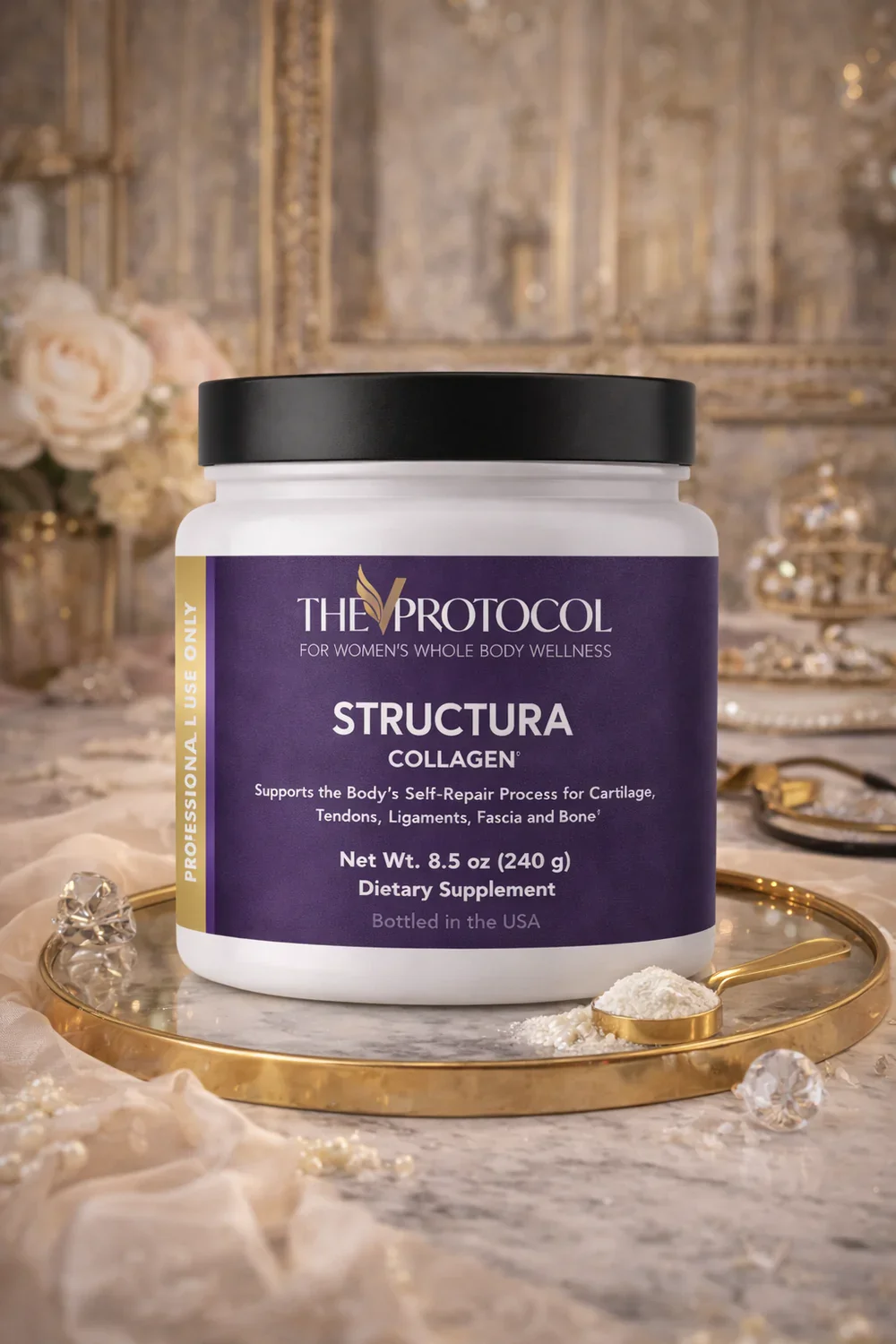
Collagen is a clinically advanced connective tissue formula designed to support joints, cartilage, tendons, ligaments, bone, skin, hair, and nails.
What Is Collagen and Why Does It Matter?
Collagen is the most abundant protein in the human body. It is the structural scaffold that holds everything together — your skin, your bones, your cartilage, your tendons, your ligaments, your gut lining, and even your blood vessels. Think of it as the architecture of your body. When it's strong and plentiful, everything holds its shape and functions well. When it breaks down faster than your body can rebuild it, you start to feel and see the difference everywhere.
Your body produces collagen naturally — but that production is directly tied to estrogen. And as estrogen declines during perimenopause and menopause, collagen production drops sharply with it.
Research published in the British Journal of Dermatology found that women lose approximately 30% of their skin collagen in the first five years following menopause. After that, the loss continues at a rate of about 2% per year for the next two decades. This is not a gradual, imperceptible shift. It is rapid, measurable, and systemic — affecting far more than just the surface of your skin.
What Collagen Loss Actually Looks Like in Your Body
This is where I want to connect the dots for you, because so many women are experiencing these symptoms without understanding the common thread running through all of them.
Your skin. The loss of dermal collagen leads to reduced elasticity, increased dryness, the deepening of lines and wrinkles, and skin that feels less resilient overall. This isn't vanity — skin integrity matters for wound healing, barrier function, and protection against infection.
Your joints. Collagen is a primary component of cartilage, the cushioning tissue between your joints. As collagen declines, so does the cartilage's ability to absorb impact and reduce friction. This is one reason why joint pain and stiffness become so much more common in perimenopause and beyond — and why many women are surprised to find their knees, hips, and hands suddenly aching when they never did before.
Your bones. Bone is not just calcium and minerals. Approximately one third of bone mass is made up of collagen, which provides the flexible framework that gives bone its tensile strength. Estrogen decline accelerates both collagen loss and bone density loss simultaneously, which is a significant driver of the increased osteoporosis risk women face after menopause.
Your muscles. Collagen supports the connective tissue that surrounds and supports muscle fibers. As collagen declines, recovery from exercise slows, muscle soreness increases, and the risk of injury to tendons and ligaments rises. This is one reason strength training becomes both more important and more challenging in midlife.
Your pelvic floor. The pelvic floor is largely composed of collagen-rich connective tissue. Its structural decline contributes to the pelvic floor dysfunction — including urinary leakage, prolapse, and reduced sexual sensation — that many women experience in the menopausal transition. This connection is significant and profoundly underrecognized.
What the Research Says About Collagen Supplementation
Here is where things get genuinely encouraging. The research on collagen supplementation has matured considerably over the past decade, and the evidence is building in meaningful ways.
A randomized controlled trial published in Nutrients found that women who supplemented with hydrolyzed collagen peptides experienced significant improvements in skin elasticity, hydration, and the appearance of wrinkles compared to placebo. Hydrolyzed collagen — collagen that has been broken down into smaller peptides — is absorbed more efficiently by the body and has been shown to stimulate fibroblasts, the cells responsible for producing new collagen, elastin, and hyaluronic acid in the skin.
On the joint side, a study published in the International Journal of Medical Sciences demonstrated that collagen supplementation reduced joint pain and improved mobility in adults with joint discomfort, with effects that were both statistically significant and clinically meaningful. For perimenopausal and menopausal women managing new or worsening joint symptoms, this is particularly relevant.
For bone health, research published in Nutrients found that postmenopausal women who took specific collagen peptides alongside calcium and vitamin D showed greater improvements in bone mineral density compared to those taking calcium and vitamin D alone. Given that osteoporosis affects an estimated one in two women over the age of 50, this is not a minor finding.
Emerging research is also exploring collagen's role in gut health — specifically its contribution to the integrity of the intestinal lining — and its potential to support cardiovascular health through the maintenance of arterial wall structure. The science here is earlier stage, but the direction is promising.
Not All Collagen Is Created Equal
I want to be direct with you here, because the supplement market is crowded and not all products deliver what they promise.
The form of collagen matters. Hydrolyzed collagen peptides — sometimes called collagen hydrolysate — have the strongest research backing for absorption and bioavailability. Marine collagen (sourced from fish) and bovine collagen (sourced from cattle) are the most studied types, with Type I collagen being most relevant for skin and bone, and Type II being most studied for joint health.
Dosing matters too. Most clinical studies showing meaningful results have used doses in the range of 5 to 15 grams per day. A product with a token 1 gram of collagen in an otherwise beautiful package is unlikely to move the needle biologically.
And the full nutritional context matters. Collagen synthesis requires vitamin C as a cofactor — without adequate vitamin C, your body cannot efficiently convert the amino acids in collagen supplements into new collagen fibers. If you're supplementing with collagen, make sure your overall nutrition supports that process.
Collagen as Part of a Whole-Body Menopause Strategy
I want to be clear that collagen supplementation is not a replacement for hormone therapy where it is appropriate, nor for the foundational pillars of nutrition, strength training, and sleep that support your health through the menopausal transition. What it is — when chosen thoughtfully and used consistently — is a meaningful addition to a comprehensive strategy.
The women I work with are not looking for magic. They are looking for evidence-based tools that support their bodies through a genuinely significant biological shift. Collagen, used correctly, is one of those tools.
When I designed The V Protocol supplement line, collagen was a deliberate inclusion — because the science supports it, because the need is real, and because women in perimenopause and menopause deserve access to formulations that are dosed and formulated to actually work.
The Bottom Line
Estrogen and collagen are deeply connected. As one declines, so does the other — and the effects ripple through your skin, your joints, your bones, your muscles, and your pelvic floor in ways that are often dismissed as "just getting older."
They are not just getting older. They are specific, physiological changes with specific, evidence-based responses available to you.
You deserve to know that. And you deserve care that acts on it.
The V-Protocol™ Approach to Whole-Body Wellness
Supplements for Women
The V-Protocol™ is built on clinical insight, evidence-based formulation, and a deep understanding of female physiology. Each supplement is intentionally designed to work within the body's interconnected systems-supporting strength, balance, and long-term vitality through every stage of a woman's life.
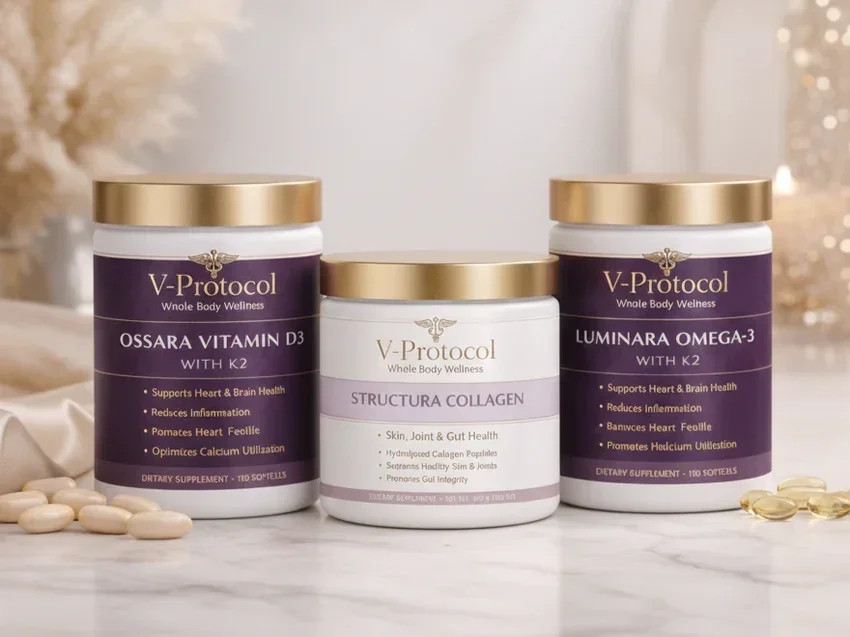
V-Protocol supplements use clinically studied, highly bioavailable ingredients selected for therapeutic effectiveness—not cost. Unlike retail supplements, these formulas are dosed and manufactured to meet medical-grade standards for purity, potency, and consistency.
Defy Menopause - Own the Change
Many women tell me: "One day I feel amazing. The next, I can barely get out of bed. Is this normal?"
Yes, it is. And no, you don’t have to suffer through it alone.
Hormonal fluctuations during perimenopause can make you feel like you’ve lost control of your body. But knowledge is powerful. And there are clear, science-backed ways to support your hormones, ease symptoms, and reclaim your energy.
That’s exactly why I created Defy Menopause: Own the Change — a 30-day program designed to give you the tools, knowledge, and support you need to move through these changes with clarity and confidence.
Inside, you’ll find:
Access to Dr. Tracy Verrico at one (1) live, group session
Clear action steps for managing symptoms naturally
Because you deserve more than just "putting up with it."
You deserve to thrive.
Let’s Connect
Schedule an Appointment | LinkedIn | YouTube | Instagram | Bona Dea Gynecology
Medical Disclaimer: The information provided in this blog is for general educational and informational purposes only and is not intended as, nor should it be considered, medical advice. This content does not establish a physician-patient relationship and is not a substitute for professional medical advice, diagnosis, or treatment. Always seek the advice of your physician or other qualified healthcare provider with any questions you may have regarding a medical condition. Never disregard professional medical advice or delay seeking it because of something you have read in this newsletter. If you think you may have a medical emergency, call your doctor or emergency services immediately.
References:
Verdier-Sévrain, S., & Bonté, F. (2007). Skin hydration: a review of its molecular mechanisms. Journal of Cosmetic Dermatology, 6(2), 75–82.
Proksch, E., et al. (2014). Oral supplementation of specific collagen peptides has beneficial effects on human skin physiology. Skin Pharmacology and Physiology, 27(1), 47–55.
Clark, K.L., et al. (2008). 24-Week study on the use of collagen hydrolysate as a dietary supplement in athletes with activity-related joint pain. Current Medical Research and Opinion, 24(5), 1485–1496.
König, D., et al. (2018). Specific collagen peptides improve bone mineral density and bone markers in postmenopausal women. Nutrients, 10(1), 97.
Barati, M., et al. (2020). Collagen supplementation for skin health: A mechanistic systematic review. Journal of Cosmetic Dermatology, 19(11), 2820–2829.