Omega-3s, Menopause, and Your Brain + Heart
If you’ve ever felt like your brain is slower, your focus is off, your memory isn’t as sharp — and at the same time you’re being told to “watch your cholesterol now” — you’re not imagining it.
These shifts are not random.
They are physiological.
And they are deeply connected.
Let’s talk about what’s really happening in menopause — and why omega-3 fatty acids become one of the most important (and overlooked) tools for protecting both cognitive and cardiovascular health.
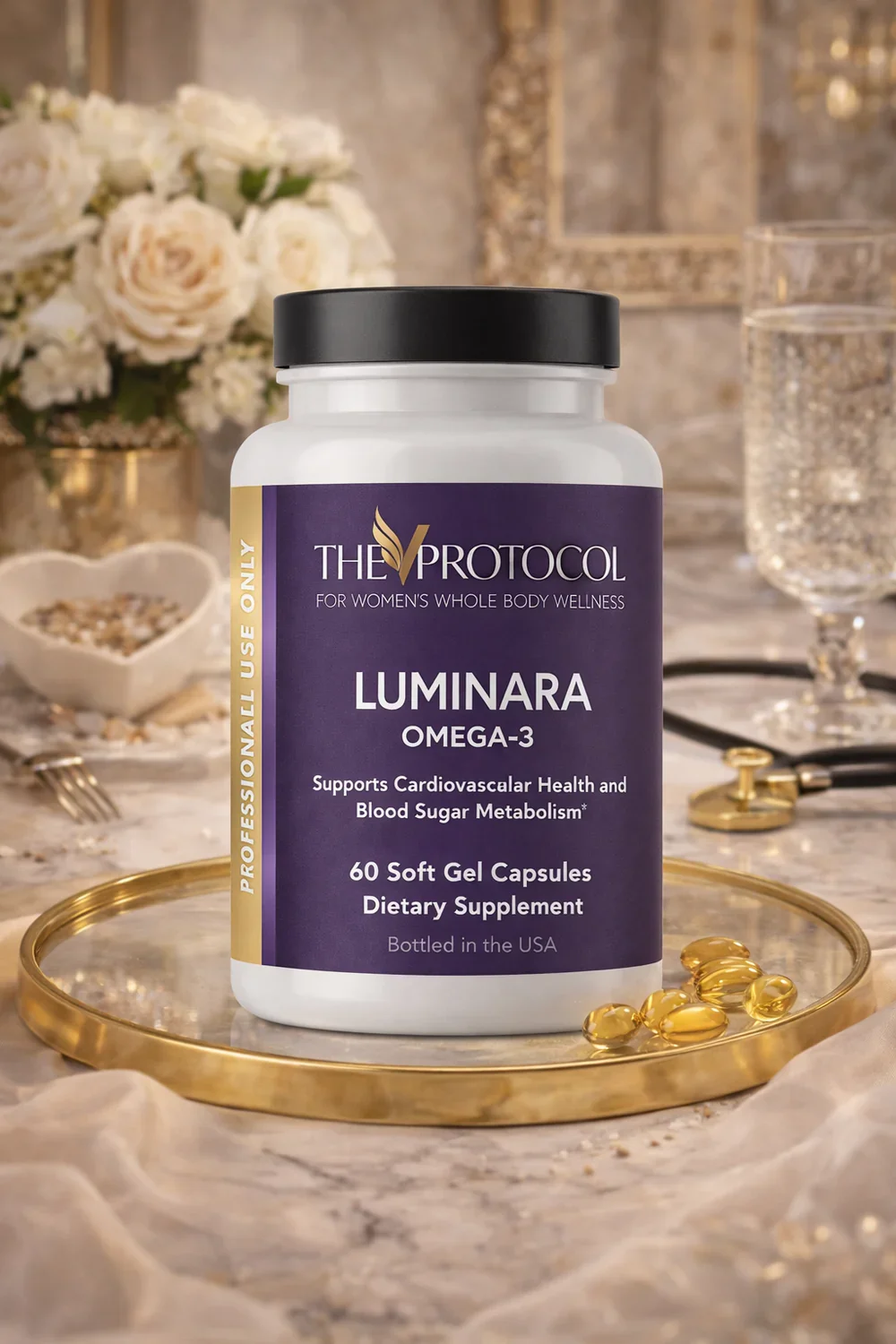
Omega-3 fatty acids play a central role in cardiovascular health, cognitive function, inflammatory balance, hormonal signalling, and skin integrity.
What Changes in Menopause — And Why It Matters
Menopause is not just about your ovaries. It’s a full-body recalibration driven largely by one thing:
The loss of estrogen.
And estrogen is not just a reproductive hormone — it is profoundly protective in both the brain and the cardiovascular system.
1. What Happens to the Brain
As estrogen declines:
Neurotransmitter signaling becomes less efficient
Brain energy metabolism shifts
Inflammation and oxidative stress increase
This is why many women experience:
Brain fog
Memory lapses
Difficulty concentrating
Mood changes
Research shows that the menopausal transition is associated with “transient cognitive deficits” and changes in mood and anxiety, directly linked to fluctuating and declining estrogen levels in the brain.
Over time, this becomes more than just symptoms.
Lower estrogen is associated with:
Increased oxidative stress
Accelerated brain aging
Higher risk of cognitive impairment and dementia
This is why midlife is not just a phase — it’s a neurological transition window.
2. What Happens to the Cardiovascular System
At the same time, something equally important is happening in your blood vessels.
Estrogen plays a key role in:
Maintaining vascular flexibility
Supporting healthy cholesterol balance
Reducing inflammation
When estrogen declines:
LDL (“bad”) cholesterol often rises
HDL (“good”) cholesterol may decrease
Blood vessels become less elastic
Blood pressure may increase
This is why cardiovascular disease risk rises sharply after menopause.
In fact, research consistently shows that loss of estrogen removes a major protective effect on heart and vascular health, increasing the risk of hypertension, atherosclerosis, and heart disease.
Where Omega-3s Come In
Now here’s the part that doesn’t get talked about enough.
The brain is one of the most omega-3–dense organs in the body — particularly rich in DHA (docosahexaenoic acid).
And both DHA and EPA (eicosapentaenoic acid) play critical roles in:
Neuronal structure and signaling
Anti-inflammatory pathways
Vascular function
Cell membrane integrity
This becomes especially important during menopause.
Omega-3s and Cognitive Health in Menopause
Let’s be very clear:
This is not about “brain supplements.”
This is about biological support for a changing brain environment.
What the Science Shows
The brain is highly enriched in DHA, which is essential for normal cognitive function
Omega-3s support neurotransmission, synaptic plasticity, and brain cell survival
Declining estrogen increases neuroinflammation — omega-3s help counteract this
A systematic review found that omega-3 intake in menopausal women:
Improved cognitive function
Reduced symptoms of anxiety and depression
Supported overall brain health through anti-inflammatory effects
There is also emerging evidence that increasing EPA and DHA intake is associated with improved brain function during the menopausal transition, although more large-scale trials are ongoing.
Why This Matters
Because menopause is a window.
Not just of symptoms — but of long-term neurological trajectory.
What you support now influences:
Cognitive resilience
Dementia risk
Emotional regulation
Omega-3s and Cardiovascular Health in Menopause
Now let’s connect this to the heart.
Omega-3s are one of the most studied nutrients in cardiovascular medicine — and their relevance increases in menopause.
Mechanisms That Matter
Omega-3s:
Reduce triglycerides
Improve endothelial (blood vessel) function
Lower inflammation
Support healthy blood pressure regulation
And this directly counteracts what’s happening post-menopause.
Why It’s Especially Important Now
After menopause, women experience:
Increased systemic inflammation
Higher rates of metabolic dysfunction
Greater cardiovascular risk
Omega-3s help offset these changes by:
Supporting lipid balance
Reducing vascular inflammation
Improving arterial flexibility
This is not theoretical — it’s a direct physiological counterbalance to estrogen loss.
The Bigger Picture: Inflammation Is the Link
Here’s the connection most people miss:
Both cognitive decline and cardiovascular disease share a common driver — inflammation.
Menopause increases inflammatory signaling.
Omega-3s help regulate it.
This is why they impact:
Brain health
Mood
Memory
Heart health
Vascular function
All at once.
Why This Conversation Matters More Than Ever
Too many women are told:
“Brain fog is normal”
“Your cholesterol just goes up with age”
“This is just part of getting older”
That’s incomplete.
What’s happening is:
Hormonal
Measurable
Modifiable
And nutrition — especially omega-3 status — is one of the most actionable levers we have.
How to Think About Omega-3s Moving Forward
This isn’t about blindly adding a supplement.
It’s about asking better questions:
Are you getting enough EPA and DHA consistently?
Is your intake aligned with your current physiology — not your pre-menopause body?
Are you addressing inflammation at its root?
Because this phase of life isn’t about doing more.
It’s about doing what’s biologically appropriate now.
The Bottom Line
Menopause changes the landscape of your brain and your cardiovascular system — simultaneously.
Estrogen declines.
Inflammation rises.
Risk shifts.
Omega-3s don’t “fix” menopause.
But they do something incredibly important: They support the systems that estrogen used to protect. And when you understand that — you stop chasing symptoms and start supporting physiology.
That’s where real, sustainable health begins.
The V-Protocol™ Approach to Whole-Body Wellness
Supplements for Women
The V-Protocol™ is built on clinical insight, evidence-based formulation, and a deep understanding of female physiology. Each supplement is intentionally designed to work within the body's interconnected systems-supporting strength, balance, and long-term vitality through every stage of a woman's life.
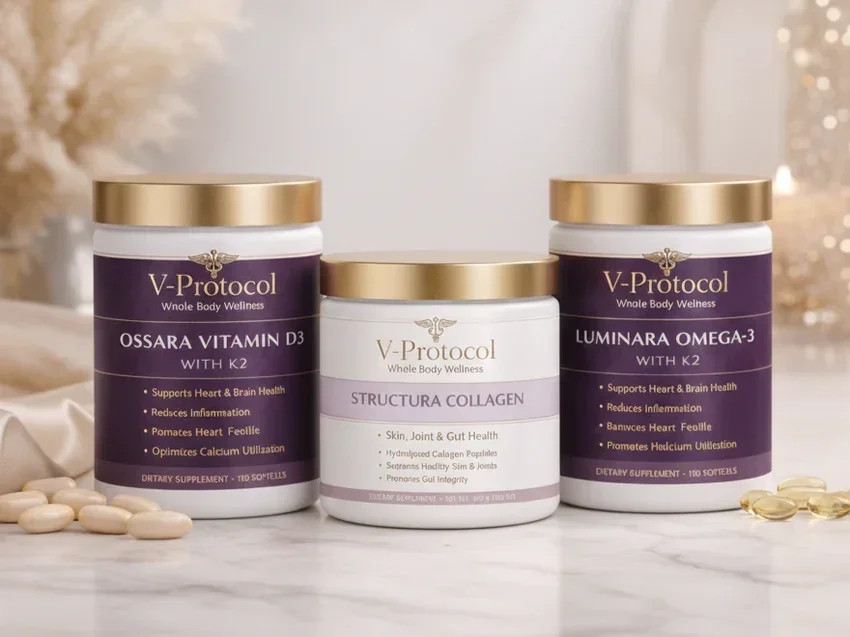
V-Protocol supplements use clinically studied, highly bioavailable ingredients selected for therapeutic effectiveness—not cost. Unlike retail supplements, these formulas are dosed and manufactured to meet medical-grade standards for purity, potency, and consistency.
Defy Menopause - Own the Change
Many women tell me: "One day I feel amazing. The next, I can barely get out of bed. Is this normal?"
Yes, it is. And no, you don’t have to suffer through it alone.
Hormonal fluctuations during perimenopause can make you feel like you’ve lost control of your body. But knowledge is powerful. And there are clear, science-backed ways to support your hormones, ease symptoms, and reclaim your energy.
That’s exactly why I created Defy Menopause: Own the Change — a 30-day program designed to give you the tools, knowledge, and support you need to move through these changes with clarity and confidence.
Inside, you’ll find:
Access to Dr. Tracy Verrico at one (1) live, group session
Clear action steps for managing symptoms naturally
Because you deserve more than just "putting up with it."
You deserve to thrive.
Let’s Connect
Schedule an Appointment | LinkedIn | YouTube | Instagram | Bona Dea Gynecology
Medical Disclaimer: The information provided in this blog is for general educational and informational purposes only and is not intended as, nor should it be considered, medical advice. This content does not establish a physician-patient relationship and is not a substitute for professional medical advice, diagnosis, or treatment. Always seek the advice of your physician or other qualified healthcare provider with any questions you may have regarding a medical condition. Never disregard professional medical advice or delay seeking it because of something you have read in this newsletter. If you think you may have a medical emergency, call your doctor or emergency services immediately.
References:
Verdier-Sévrain, S., & Bonté, F. (2007). Skin hydration: a review of its molecular mechanisms. Journal of Cosmetic Dermatology, 6(2), 75–82.
Proksch, E., et al. (2014). Oral supplementation of specific collagen peptides has beneficial effects on human skin physiology. Skin Pharmacology and Physiology, 27(1), 47–55.
Clark, K.L., et al. (2008). 24-Week study on the use of collagen hydrolysate as a dietary supplement in athletes with activity-related joint pain. Current Medical Research and Opinion, 24(5), 1485–1496.
König, D., et al. (2018). Specific collagen peptides improve bone mineral density and bone markers in postmenopausal women. Nutrients, 10(1), 97.
Barati, M., et al. (2020). Collagen supplementation for skin health: A mechanistic systematic review. Journal of Cosmetic Dermatology, 19(11), 2820–2829.