Supplements and Menopause: What Actually Deserves a Place in Your Routine
Women in midlife are marketed to relentlessly. Every week, a patient brings me a photo of a supplement label she saw online, promising to balance hormones, burn belly fat, or erase hot flashes. Some cost more than a prescription. Many contain proprietary blends with doses too small to matter. Very few are supported by meaningful research.
I understand the appeal. When you feel unlike yourself and your symptoms are being dismissed, a bottle that promises relief feels like taking action. But you deserve better than marketing. You deserve a clear, evidence-informed answer to a simple question: which supplements are actually worth considering in menopause, and why?
Let me start with what supplements cannot do, then walk you through the five I believe earn a place in the conversation.

First, an Honest Reality Check
Supplements are not regulated like medications. In the United States, the FDA does not approve dietary supplements for safety or effectiveness before they are sold, which means quality varies widely. Choosing reputable brands with transparent labels matters.
Supplements also do not treat hot flashes in any reliable way. The Menopause Society's position statement on non-hormonal therapies does not recommend herbal or dietary supplements for hot flashes, because the evidence is weak or inconsistent. If hot flashes, night sweats, or sleep disruption are affecting your life, the effective options are hormone therapy or prescription non-hormonal medications, along with approaches such as cognitive behavioral therapy.
And supplements never replace the foundations: protein-rich whole foods, strength training, sleep, stress management, limiting alcohol, and regular medical care.
So where do supplements fit? They fill specific gaps. Menopause changes your body in predictable ways, and a few well-studied nutrients can support the systems most affected, especially when your diet consistently falls short.
Why Menopause Changes Your Nutritional Needs
Estrogen does far more than regulate your cycle. It helps maintain muscle, protects bone, supports blood vessels and cholesterol balance, keeps skin and connective tissue resilient, and influences how you handle blood sugar and where you store fat. As estrogen declines, women experience:
Faster loss of muscle mass and strength (sarcopenia)
Accelerated bone loss, particularly in the first five to seven years after menopause
Rising LDL cholesterol and cardiovascular risk
Declining collagen in skin and connective tissue, with more joint aches
Shifts in metabolism, insulin sensitivity, and the gut microbiome
When I built a supplement framework for my patients, I did not want a long list. I wanted to address each of these areas with one well-studied option. That framework became the V-Protocol Menopause Supplement Bundle, a collection I curated by selecting five specific products I believe work well together. Here is the reasoning behind each one.
1. Creatine: For Muscle, Strength, and More
Creatine is one of the most researched supplements in the world, and it is no longer just for athletes. Your body uses creatine to rapidly regenerate energy in muscle and brain cells.
What the research shows: In older adults, combining creatine with resistance training produces greater gains in lean mass and strength than training alone. Researchers have increasingly focused on women, noting that women tend to have lower creatine stores and that hormonal changes in menopause may make supplementation particularly relevant. Studies on bone are more mixed: a two-year trial in postmenopausal women found creatine with resistance training did not improve bone density, but did show favorable changes in bone geometry and walking performance. Early research on mood and cognition is promising but not yet conclusive.
The key point: Creatine works best alongside strength training. It amplifies the work; it does not replace it. A daily dose of about 3 to 5 grams of creatine monohydrate is the most studied. Women with kidney disease should discuss it with their doctor first.
2. Collagen: For Skin, Joints, and Connective Tissue
Women lose a significant amount of skin collagen in the first years after menopause, which contributes to thinner, drier skin. Many women also notice new aches in joints and tendons.
What the research shows: Meta-analyses of randomized trials have found that oral hydrolyzed collagen supplements can improve skin hydration and elasticity. Specific collagen peptides have been studied for joint comfort, particularly in active adults, with modest benefits. Collagen is not a complete protein, so it should not be counted as your main protein source, but it can be a helpful addition.
The key point: Expect gradual, modest benefits over several months, not overnight transformation. Consistency matters.
3. Fiber: For Gut Health, Metabolism, and Heart Health
Fiber may be the least glamorous item on this list and one of the most important. Most American women eat far less fiber than recommended, often around half of the roughly 25 grams a day suggested for adult women.
What the research shows: A large analysis published in The Lancet found that higher fiber intake was associated with lower rates of heart disease, type 2 diabetes, and colorectal cancer, and with lower body weight, blood pressure, and cholesterol. Certain fibers, such as resistant starch, beta-glucan, and partially hydrolyzed guar gum, also feed beneficial gut bacteria and support regularity. In menopause, when insulin sensitivity and cholesterol often worsen, fiber is a practical tool for metabolic health.
The key point: Food first (vegetables, legumes, whole grains, seeds, and fruit), with a supplement to help close the gap. Increase fiber gradually and drink plenty of water to avoid bloating.
4. Vitamin D With K2: For Bone and Beyond
Vitamin D is essential for absorbing calcium and maintaining bone, and many women have low levels, especially those with limited sun exposure, darker skin, or higher body weight. Vitamin K2 helps activate proteins involved in directing calcium into bone.
What the research shows: Vitamin D is a necessary part of bone health, particularly for women who are deficient or at risk of deficiency. It is worth being honest that large trials in people who already have adequate levels have not shown that extra vitamin D prevents fractures on its own. That is why I emphasize testing when appropriate and correcting a true shortfall rather than megadosing. For K2, a three-year randomized trial in healthy postmenopausal women found that a daily dose of the MK-7 form slowed age-related bone loss and helped maintain bone strength compared with placebo.
The key point: Vitamin D and K2 support bone health alongside adequate calcium (ideally from food), strength training, and, when needed, bone-building medications. Anyone taking warfarin or another blood thinner must speak with their doctor before using vitamin K.
5. Omega-3 Fatty Acids: For Heart, Brain, and Inflammation
Omega-3 fats, EPA and DHA, are found mainly in fatty fish such as salmon, sardines, and mackerel. Many women do not eat fish regularly.
What the research shows: Omega-3s lower triglycerides and play a role in heart, brain, joint, and skin health. In the large VITAL trial, omega-3 supplements did not reduce major cardiovascular events overall but were associated with fewer heart attacks, particularly among people who ate little fish. Because cardiovascular disease is the leading cause of death in women and risk rises after menopause, ensuring adequate omega-3 intake is a reasonable part of a heart-healthy approach.
The key point: If you eat fatty fish twice a week, you may need less. If you rarely do, a quality supplement can help fill the gap. Talk to your doctor if you take blood thinners.
Why This Combination
Each of these five supplements supports a different system affected by menopause: muscle (creatine), skin and connective tissue (collagen), gut and metabolism (fiber), bone (vitamin D and K2), and heart and brain (omega-3). There is very little overlap, which means you are not paying for redundancy. And all five are supported by meaningful research, rather than trends.
That is why I curated the V-Protocol Menopause Supplement Bundle around them. I did not invent these supplements or formulate them. I selected these specific products because, in my clinical judgment, they represent a sensible, foundational combination for women in midlife, packaged together so you do not have to piece together a routine from a dozen different bottles.
The bundle is a starting point, not a cure. It is meant to support, alongside strength training, nourishing food, good sleep, and individualized medical care, including hormone therapy when it is appropriate for you.
Before You Start Any Supplement
Talk with your doctor, especially if you take prescription medications, blood thinners, or have kidney, liver, or heart conditions.
Bring your full list of supplements to every appointment. Interactions are real.
Introduce new supplements one at a time when possible, so you can notice how you respond.
Give each supplement a fair trial of two to three months before judging it.
Revisit your routine yearly. Your needs will change.
You deserve to feel strong, clear, and like yourself in midlife. Supplements can be one supportive piece of that, but they work best as part of a thoughtful plan built with a provider who knows your history. Advocate for yourself, ask questions about everything you take, and invest in what is backed by evidence rather than marketing.
These statements have not been evaluated by the Food and Drug Administration. These products are not intended to diagnose, treat, cure, or prevent any disease. This article is for educational purposes and is not a substitute for individualized medical advice.
Meet the Menopause Bundle
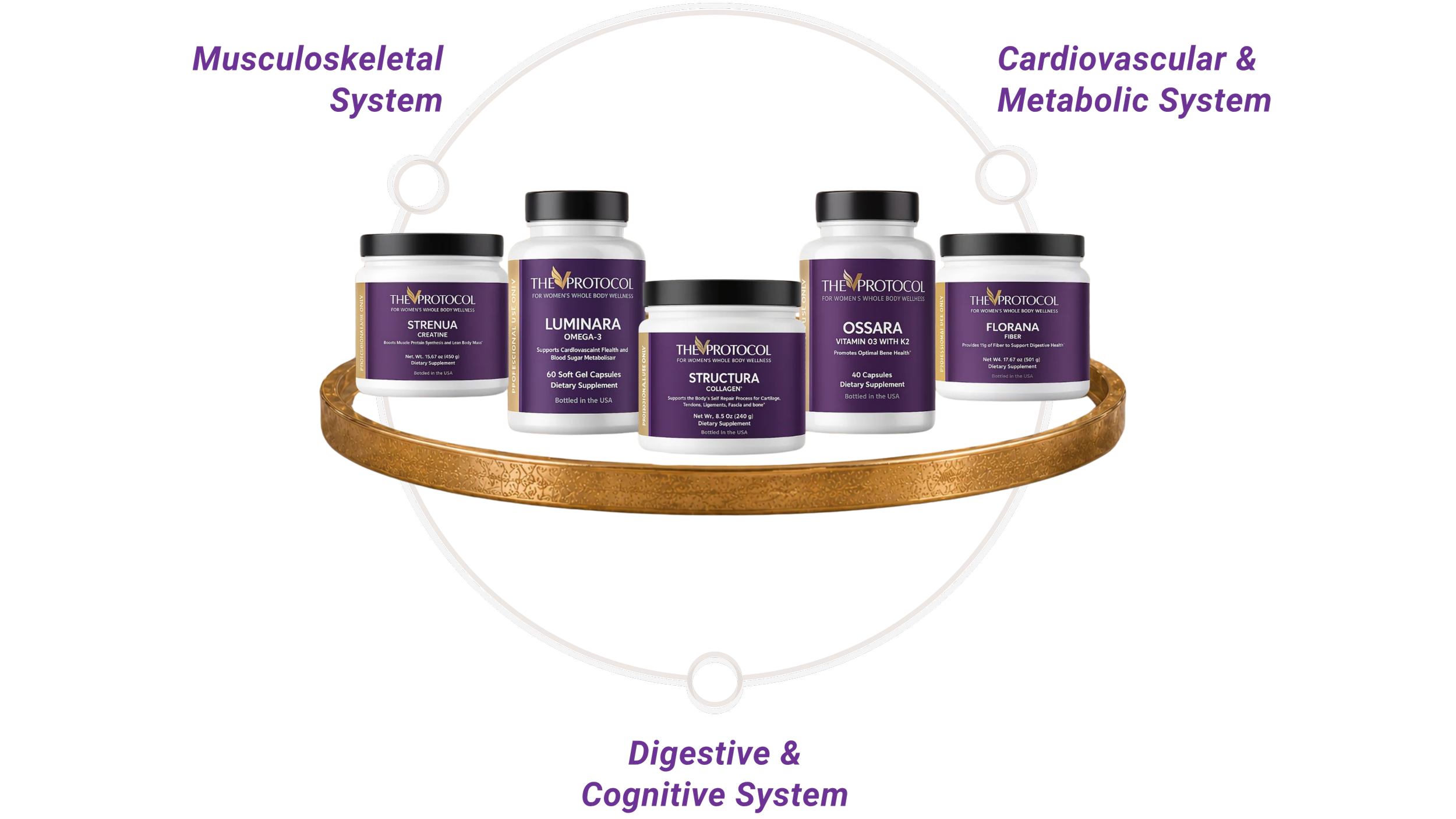
The Menopause Supplement Bundle supports your journey through this important stage of life.
This bundle includes:
Creatine – Enhances muscular performance, endurance & recovery, supports optimal cognitive function, promotes longevity & healthy aging.
Collagen – Promotes healthy skin, hair, nails, and supports joint integrity.
Fiber – Supports digestive health, regularity, microbiome balance, and provides gentle relief for occasional constipation and diarrhea.
Vitamin D & K – Maintains bone & dental health, increases calcium absorption, supports cardiovascular health, and helps increase musculoskeletal strength.
Omega-3 – Supports cardiovascular health & blood sugar metabolism, supports cognitive function, healthy skin, joints & connective tissues, and maintains normal inflammatory balance.
Defy Menopause - Own the Change
Many women tell me: "One day I feel amazing. The next, I can barely get out of bed. Is this normal?"
Yes, it is. And no, you don’t have to suffer through it alone.
Hormonal fluctuations during perimenopause can make you feel like you’ve lost control of your body. But knowledge is powerful. And there are clear, science-backed ways to support your hormones, ease symptoms, and reclaim your energy.
That’s exactly why I created Defy Menopause: Own the Change — a 30-day program designed to give you the tools, knowledge, and support you need to move through these changes with clarity and confidence.
Inside, you’ll find:
Access to Dr. Tracy Verrico at one (1) live, group session
Clear action steps for managing symptoms naturally
Because you deserve more than just "putting up with it."
You deserve to thrive.
Let’s Connect
Schedule an Appointment | LinkedIn | YouTube | Instagram | Bona Dea Gynecology
Medical Disclaimer: The information provided in this blog is for general educational and informational purposes only and is not intended as, nor should it be considered, medical advice. This content does not establish a physician-patient relationship and is not a substitute for professional medical advice, diagnosis, or treatment. Always seek the advice of your physician or other qualified healthcare provider with any questions you may have regarding a medical condition. Never disregard professional medical advice or delay seeking it because of something you have read in this newsletter. If you think you may have a medical emergency, call your doctor or emergency services immediately.
References
U.S. Food and Drug Administration. Dietary Supplements: Questions and Answers. fda.gov.
The 2023 Nonhormone Therapy Position Statement of The North American Menopause Society. Menopause. 2023;30(6):573-590.
Smith-Ryan AE, Cabre HE, Eckerson JM, Candow DG. Creatine Supplementation in Women's Health: A Lifespan Perspective. Nutrients. 2021;13(3):877.
Chilibeck PD, Kaviani M, Candow DG, Zello GA. Effect of creatine supplementation during resistance training on lean tissue mass and muscular strength in older adults: a meta-analysis. Open Access J Sports Med. 2017;8:213-226.
Chilibeck PD, et al. Effects of Creatine and Resistance Training on Bone Health in Postmenopausal Women. Med Sci Sports Exerc. 2023;55(5):899-910.
de Miranda RB, Weimer P, Rossi RC. Effects of hydrolyzed collagen supplementation on skin aging: a systematic review and meta-analysis. Int J Dermatol. 2021;60(12):1449-1461.
Reynolds A, et al. Carbohydrate quality and human health: a series of systematic reviews and meta-analyses. Lancet. 2019;393(10170):434-445.
U.S. Department of Agriculture and U.S. Department of Health and Human Services. Dietary Guidelines for Americans.
Knapen MHJ, et al. Three-year low-dose menaquinone-7 supplementation helps decrease bone loss in healthy postmenopausal women. Osteoporos Int. 2013;24(9):2499-2507.
LeBoff MS, et al. Supplemental Vitamin D and Incident Fractures in Midlife and Older Adults. N Engl J Med. 2022;387(4):299-309.
Demay MB, et al. Vitamin D for the Prevention of Disease: An Endocrine Society Clinical Practice Guideline. J Clin Endocrinol Metab. 2024;109(8):1907-1947.
Manson JE, et al. Marine n-3 Fatty Acids and Prevention of Cardiovascular Disease and Cancer. N Engl J Med. 2019;380(1):23-32.
National Institutes of Health, Office of Dietary Supplements. Fact sheets: Vitamin D; Vitamin K; Omega-3 Fatty Acids.