Vulvar and Clitoral Changes in Menopause
In my years of practice, one of the patterns I see most consistently is this: women arrive knowing something has changed. They have noticed it in the mirror, felt it during intimacy, or sensed it in a thousand small daily moments — a new discomfort with clothing, a dryness that was not there before, a loss of sensation they cannot quite explain. And almost universally, they tell me the same thing: no one ever told them this could happen.
The physical changes that occur in the vulva and clitoris during and after menopause are not rare edge cases. They are the expected consequence of estrogen decline — as predictable, in their way, as hot flashes. And they are far more consequential than most women are prepared for. This article is an attempt to change that.
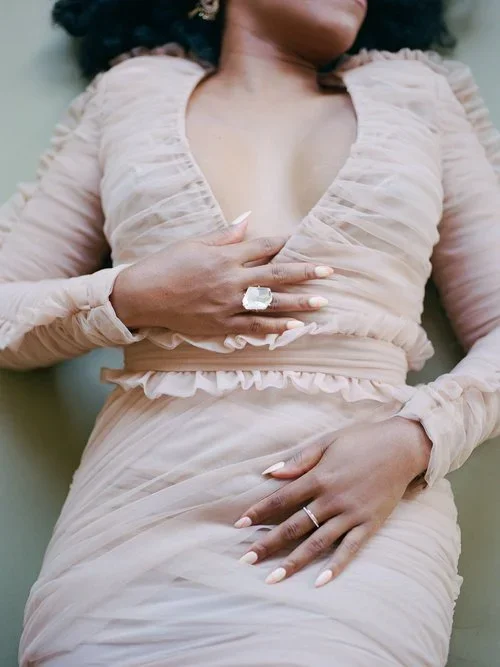
You deserve care that takes your whole body seriously — including the parts of it that are too often left out of the conversation.
Genitourinary Syndrome of Menopause: What It Is
The umbrella term for these changes is genitourinary syndrome of menopause, or GSM. It is a medical condition — not a cosmetic issue, not an inevitability of aging, not something a woman should accept as her new normal. GSM describes the broad set of changes that occur to the vulva, vagina, clitoris, urethra, and bladder when estrogen levels fall and remain low over time.
GSM is chronic and progressive. Unlike hot flashes, which often diminish over time, genitourinary changes worsen over the years without treatment. The tissues that depend on estrogen for their thickness, elasticity, lubrication, and sensitivity become thinner, drier, more fragile, and less responsive. This is not abstract. It has real, daily-life implications for comfort, for intimacy, for bladder control, and for a woman's sense of herself.
What Happens to the Vulva
The external genital tissues are among the most estrogen-responsive in the body — which means they are among the first to show the effects of estrogen withdrawal, and among the most dramatically changed in the postmenopausal years.
The labia majora lose the fat pads that gave them volume and cushioning. This is not just a visual change — it reduces the natural protection the labia provide to underlying structures, making the vulvar vestibule more exposed and more prone to friction, irritation, and microtrauma. Women describe the sensation as 'deflated,' or notice that fabrics that never bothered them before now cause discomfort during walking or exercise.
The labia minora thin and lose elasticity. In some women, adhesions can form where tissue surfaces come into contact and stick. Dryness reduces the natural lubrication that ordinarily protects these surfaces. Pigmentation may fade, and the overall texture and architecture of the vulva changes in ways that many women find disconcerting — particularly because they were never told to expect it.
These changes are structural and hormonally driven. They have nothing to do with hygiene, lifestyle, or anything a woman has done or failed to do. And they are reversible with appropriate treatment.
What Happens to the Clitoris
If the labial changes represent the visible face of GSM, the clitoral changes represent its most personally significant dimension — and they are the part of this conversation that is most consistently missing from women's healthcare.
The clitoris is an extensive internal organ, far larger than its external glans suggests, made of erectile tissue, nerves, blood vessels, and fascia extending several centimeters into the pelvis.
Like the vaginal walls and labia, it is profoundly dependent on estrogen. When estrogen declines, the clitoris undergoes changes that are physiological, measurable, and directly relevant to sexual function. The glans of the clitoris may become smaller and less prominent. The clitoral hood can lose elasticity and contract, making the glans less accessible and less responsive to stimulation.
Blood flow to the erectile tissues decreases as estrogen-supported vasodilation diminishes — and with less engorgement, there is less sensation. Nerve responsiveness changes in ways that women describe as numbness, dullness, or a muting of sensation that was previously reliable.
The downstream effect is predictable: orgasms become slower to achieve, weaker when they occur, or — for some women — stop occurring altogether. This is not psychological. It is not a loss of desire or interest. It is tissue-level physiology responding to hormone loss. Women who have experienced this often believe something is wrong with them, or that this is simply what happens with aging. Neither is true.
Why Women Are Left in the Dark
The persistence of silence around these changes in women's healthcare is one of the more troubling failures of our medical system. GSM is underdiagnosed. It is undertreated. And in too many clinical encounters, it is not discussed at all — not at the menopausal transition, not at annual exams, and often not even when women bring it up directly and are told it is 'just part of aging.'
This silence has real consequences. When women do not know that these changes are physiological and treatable, they conclude that they are personal — that something has gone wrong with them specifically. The shame, grief, and loss of sexual confidence that follow are unnecessary. They are the result of a system that has consistently failed to treat women's urogenital health as the medical priority it is.
The 2025 AUA Guidelines: A Meaningful Shift
In 2025, the American Urological Association formally recognized GSM as a critical health issue affecting women across medical specialties and endorsed vaginal estrogen as a safe, effective, and essential treatment. This matters because GSM does not present exclusively in gynecology offices — it shows up in urology (in the form of recurrent urinary tract infections and bladder urgency), in dermatology, in rheumatology, and in primary care. Having cross-specialty recognition means more doors through which women can access the treatment they need.
The guidelines also explicitly acknowledged that GSM is underdiagnosed and undertreated — and that it is progressive without intervention. This is institutional validation of what women have been experiencing for decades without adequate medical acknowledgment.
What Actually Works
Over-the-counter lubricants and vaginal moisturizers provide meaningful relief from friction and dryness, particularly in the short term. They are valuable. But they do not address the underlying tissue changes — the thinning, the loss of elasticity, the reduced blood flow, the declining nerve responsiveness. For that, you need a treatment that works at the hormonal level.
Prescription Vaginal Estrogen
Local vaginal estrogen — available as a cream, ring, or suppository — delivers estrogen directly to the urogenital tissues with minimal systemic absorption. It is the most well-studied treatment for GSM and the most consistently effective. The evidence shows increases in tissue thickness, restoration of collagen and elastin, improved lubrication, reductions in urinary urgency and recurrent UTIs, and meaningful improvements in sexual function including clitoral responsiveness. For the vast majority of women, including many with a history of hormone-sensitive cancers (a nuanced conversation best had with a knowledgeable provider), vaginal estrogen is safe.
Vaginal DHEA (Prasterone)
DHEA delivered locally to vaginal tissue is converted to both estrogen and testosterone within the tissue itself, providing urogenital restoration through a different hormonal pathway. It is an option for women who prefer not to use estrogen or need additional treatment, and it has a good evidence base for improving dyspareunia and sexual function in postmenopausal women.
Ospemifene
This is an oral selective estrogen receptor modulator that acts on vaginal and vulvar tissues without the same systemic estrogen effects. It is an option for women who prefer an oral route or who cannot use topical preparations.
Starting the Conversation
If you have been experiencing any of the changes described here — vulvar dryness, discomfort, changes in sensation, difficulty with orgasm, urinary urgency, or recurrent UTIs — please know that these are not simply part of getting older. They are symptoms of a treatable medical condition. Bring them to your provider directly and specifically. If your provider dismisses them or offers only a moisturizer without any further investigation, seek a second opinion from a clinician who specializes in menopause medicine.
You deserve care that takes your whole body seriously — including the parts of it that are too often left out of the conversation. These changes are real. Treatment is available. Relief is possible. And the intimacy, comfort, and confidence that GSM has diminished are worth fighting for.
Defy Menopause - Own the Change
Many women tell me: "One day I feel amazing. The next, I can barely get out of bed. Is this normal?"
Yes, it is. And no, you don’t have to suffer through it alone.
Hormonal fluctuations during perimenopause can make you feel like you’ve lost control of your body. But knowledge is powerful. And there are clear, science-backed ways to support your hormones, ease symptoms, and reclaim your energy.
That’s exactly why I created Defy Menopause: Own the Change — a 30-day program designed to give you the tools, knowledge, and support you need to move through these changes with clarity and confidence.
Inside, you’ll find:
Access to Dr. Tracy Verrico at one (1) live, group session
Clear action steps for managing symptoms naturally
Because you deserve more than just "putting up with it."
You deserve to thrive.
Let’s Connect
Schedule an Appointment | LinkedIn | YouTube | Instagram | Bona Dea Gynecology
Medical Disclaimer: The information provided in this blog is for general educational and informational purposes only and is not intended as, nor should it be considered, medical advice. This content does not establish a physician-patient relationship and is not a substitute for professional medical advice, diagnosis, or treatment. Always seek the advice of your physician or other qualified healthcare provider with any questions you may have regarding a medical condition. Never disregard professional medical advice or delay seeking it because of something you have read in this newsletter. If you think you may have a medical emergency, call your doctor or emergency services immediately.
References
1. Gass M, Portman D. Genitourinary syndrome of menopause. Menopause. 2014;21(10):1063–1068.
2. Gass M, Portman D. Genitourinary syndrome of menopause. Climacteric. 2014;17(5):557–563.
3. Farage M, Sharma K, Wang Y, et al. Histological and Gene Expression Analysis of Menopause Effects on Vulvovaginal Tissue. Journal of Clinical Medicine Research. 2019;11(10):745–759.
4. Galęba A, Bajurna B, Marcinkowski J. The Role of Cosmetic Gynecology Treatments in Women in Perimenopausal Period. Open Journal of Nursing. 2015;5:153–157.
5. Phillips N, Bachmann G. Vaginal health prescription. Menopause. 2015;22(2):127–128.
6. Factors N. Predisposing Factors. Acta Radiologica. 1962;58(S217):24–29.
7. American Urological Association (AUA). Guideline on Genitourinary Syndrome of Menopause. 2025. Endorsed vaginal estrogen as safe and essential treatment for GSM. https://www.auanet.org/
8. The Menopause Society (formerly NAMS). GSM position statement and treatment guidance. Ongoing guidance updated through 2024. https://www.menopause.org/
9. Portman DJ, Gass ML; Vulvovaginal Atrophy Terminology Consensus Conference Panel. Genitourinary syndrome of menopause: new terminology for vulvovaginal atrophy from the International Society for the Study of Women's Sexual Health and the North American Menopause Society. Menopause. 2014;21(10):1063–1068. https://doi.org/10.1097/GME.0000000000000329
10. Shifren JL, et al. The North American Menopause Society recommendations for clinical care of midlife women. Menopause. 2014;21(10):1038–1062.