Why Muscle Is the Organ of Longevity — and Why Menopause Makes This Urgent
When most people think about longevity, they think about the heart, the brain, or the gut. Muscle rarely makes that list — and that is one of the most consequential oversights in how we think about women's long-term health.
Skeletal muscle is not simply the tissue that lets you lift groceries or climb stairs. It is a metabolically active endocrine organ — one that produces signaling molecules, regulates blood sugar, supports immune function, protects bone density, and plays a central role in cognitive health. The research on muscle mass as a predictor of both lifespan and healthspan has become so consistent that some researchers now consider it one of the most powerful biomarkers we have for how a person will age.
For women, this conversation has a specific and urgent dimension: the hormonal changes of perimenopause and menopause accelerate muscle loss in ways that go well beyond what normal aging alone produces. Understanding what is happening — and what to do about it — is one of the most important things I can offer any woman in midlife.
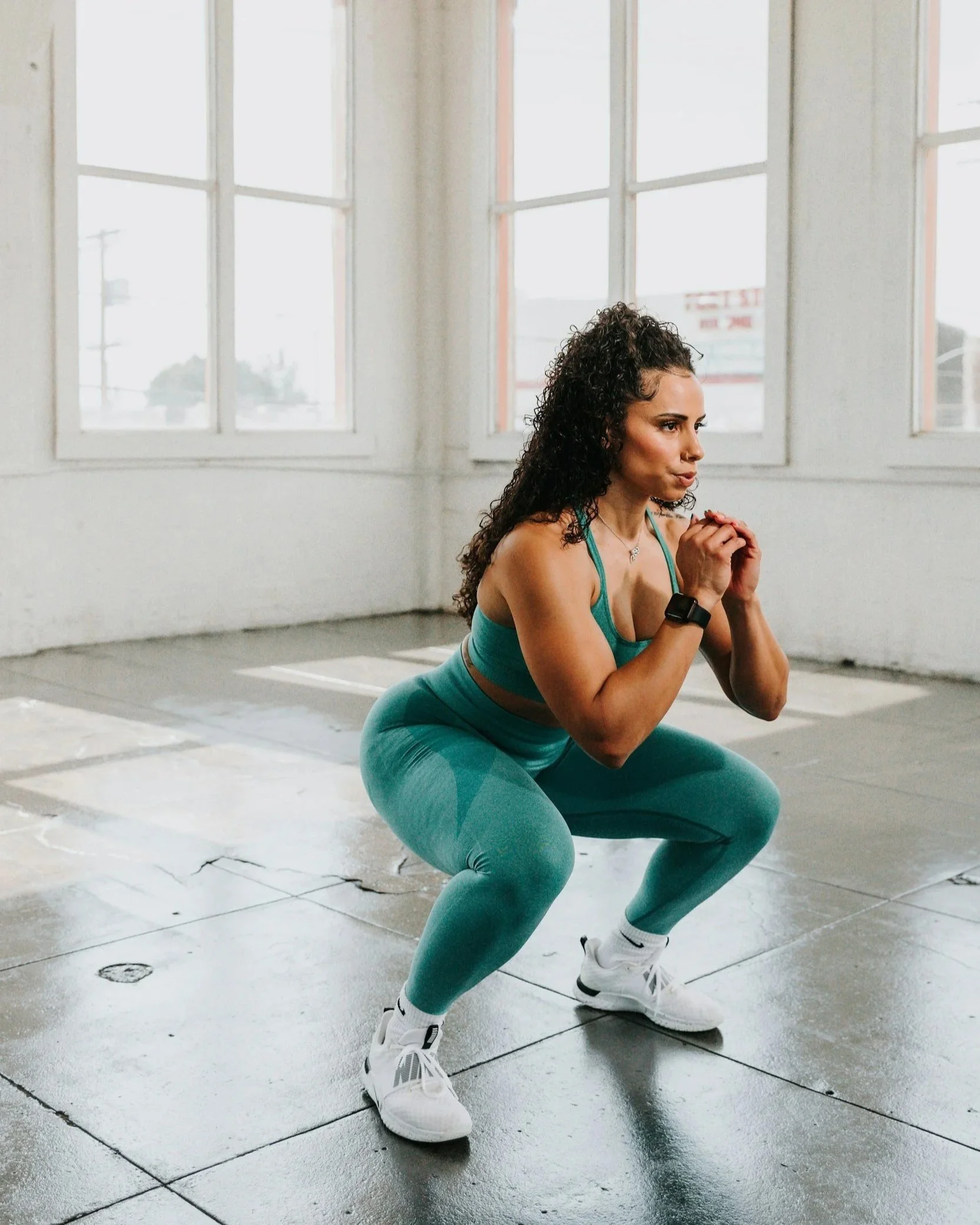
Muscle loss in midlife is not primarily a physical performance problem. It is a whole-body health problem.
What Happens to Muscle During Menopause
Sarcopenia is the medical term for age-related muscle loss. It begins gradually in the thirties for most people, accelerates in the fifties and sixties, and is compounded dramatically by the decline in estrogen that accompanies menopause.
Estrogen is not just a reproductive hormone. It plays a direct role in muscle protein synthesis — the process by which your body builds and repairs muscle tissue. Estrogen interacts with muscle satellite cells, which are responsible for muscle repair and regeneration. It modulates the inflammatory environment within muscle tissue. And it supports the neuromuscular signaling that allows muscle to contract with appropriate force and efficiency.
When estrogen declines, all of these functions are impaired simultaneously. Studies show that women can lose muscle mass at a rate of 1 to 2 percent per year after menopause, with accelerated loss in the early postmenopausal years. Over a decade, that adds up to a meaningful and functionally significant reduction — one that rarely announces itself dramatically until a woman notices that climbing stairs is harder, that her posture has changed, or that a fall results in a fracture that would not have occurred a decade earlier.
Why This Matters for Far More Than Strength
Muscle loss in midlife is not primarily a physical performance problem. It is a whole-body health problem.
Metabolic consequences. Muscle tissue is the primary site of glucose disposal in the body — meaning it is the main place where blood sugar is cleared from circulation after a meal. Less muscle means poorer glucose regulation, which directly increases the risk of insulin resistance and type 2 diabetes. This is one of the reasons metabolic risk rises sharply in the postmenopausal years even in women who have not changed their diet or activity level.
Cardiovascular consequences. Muscle mass is inversely associated with cardiovascular disease risk independently of other factors, including body weight. The mechanisms include muscle's role in lipid metabolism, inflammation regulation, and blood pressure control.
Bone consequences. Muscle and bone are mechanically and biochemically interdependent. The mechanical loading that muscle places on bone is one of the primary stimuli for bone formation. Less muscle means less loading, which accelerates bone density loss — adding a second layer of fracture risk on top of the direct effects of estrogen loss on bone.
Cognitive consequences. Emerging research has identified myokines — signaling molecules produced by contracting muscle — that directly support brain health, reduce neuroinflammation, and appear to be protective against cognitive decline. One of the most studied of these, irisin, crosses the blood-brain barrier and has been associated with improved memory and reduced Alzheimer's pathology in animal models. This research is early but directionally consistent: what is good for muscle appears to be good for the brain.
Functional independence. Perhaps most practically: muscle mass is the single strongest predictor of physical function in older age. Falls and fall-related fractures are among the leading causes of loss of independence in women over 65. The time to protect against that outcome is not at 65. It is now.
What Actually Works: Building and Preserving Muscle in Midlife
The intervention with the strongest and most consistent evidence base is resistance training — lifting weights, working against resistance, loading the body in ways that challenge muscle to adapt and grow.
I want to be specific here, because "exercise more" is not the same thing as "do the things that actually preserve muscle." Cardiovascular exercise has important benefits, but it does not stimulate muscle protein synthesis the way resistance training does. Walking is wonderful for cardiovascular health and mood, but it will not rebuild the muscle mass you are losing to hormonal change.
Progressive resistance training — meaning training that gradually increases in challenge over time — should be a priority, not an afterthought, for women in perimenopause and beyond. Two to three sessions per week, targeting major muscle groups with compound movements, is the evidence-supported minimum for meaningful benefit. More is generally better, within reason and recovery.
Protein is the other essential variable. Muscle is built from protein — specifically from the amino acids your body extracts from dietary protein and uses for muscle protein synthesis. The recommended dietary allowance for protein is widely considered inadequate for older adults and particularly for women in midlife who are trying to preserve or rebuild muscle. I typically recommend aiming for 1.5 to 2.0 grams of protein per kilogram of ideal body weight daily, distributed across meals rather than concentrated in a single large intake. Leucine, an amino acid found in high concentrations in animal proteins and whey, is a particularly potent stimulator of muscle protein synthesis.
Hormone therapy plays a meaningful supporting role. Estrogen replacement, when appropriate, has been shown to attenuate the muscle loss associated with menopause. It does not replace the need for resistance training and adequate protein — but it creates a hormonal environment that is more receptive to those interventions. Women on hormone therapy who also engage in resistance training consistently show better muscle mass outcomes than those using either approach alone.
Sleep and recovery matter more than most women realize. Muscle is built during recovery, not during the workout itself. Chronic sleep deprivation impairs muscle protein synthesis, elevates cortisol, and undermines the hormonal milieu needed for effective adaptation to training. Prioritizing sleep quality — which may mean addressing night sweats and other menopausal sleep disruptors directly — is part of the muscle preservation strategy.
Creatine & Collagen: Backed by clinical research, creatine monohydrate (≥5g/day) and collagen peptides (~15g/day) — when paired with resistance training — support meaningful gains in lean muscle mass, strength, and connective-tissue health in postmenopausal women, with an excellent safety profile. That's exactly why we formulated Strenua Creatine and Structura Collagen — pick them up today and pair them with your strength training to protect the muscle and mobility that matter most through menopause and beyond."
The V-Protocol™ Approach to Whole-Body Wellness
Supplements for Women
The V-Protocol™ is built on clinical insight, evidence-based formulation, and a deep understanding of female physiology. Each supplement is intentionally curated to work within the body's interconnected systems-supporting strength, balance, and long-term vitality through every stage of a woman's life.
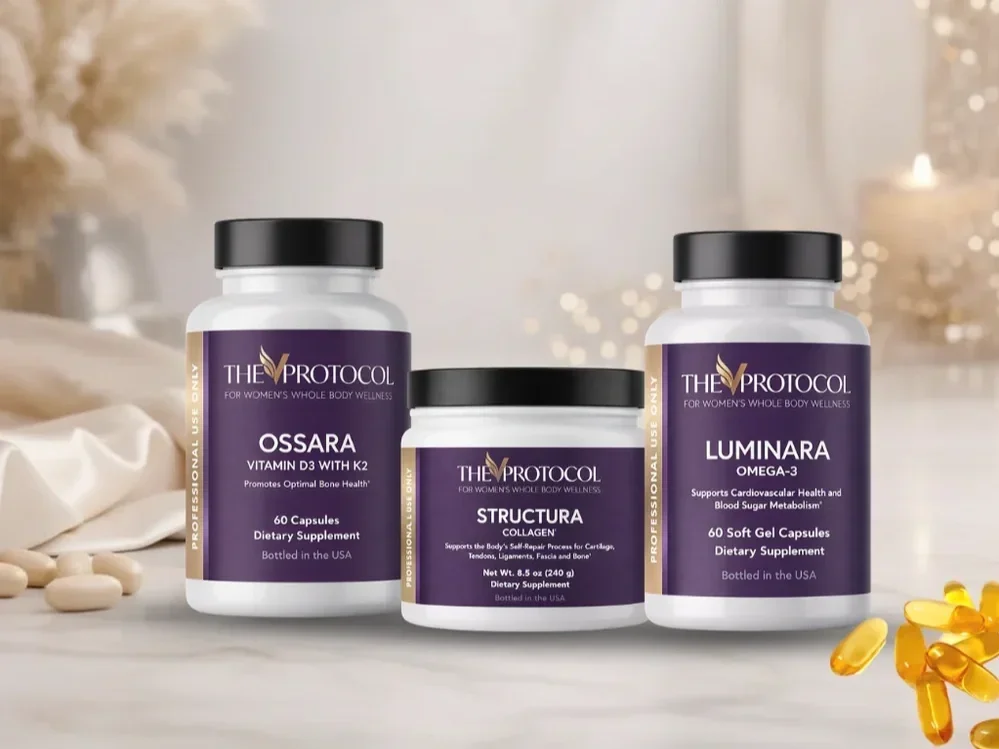
V-Protocol supplements use clinically studied, highly bioavailable ingredients selected for therapeutic effectiveness—not cost. Unlike retail supplements, these formulas are dosed and manufactured to meet medical-grade standards for purity, potency, and consistency.*
*This statement has not been evaluated by the Food and Drug Administration. These products are not intended to diagnose, treat, cure, or prevent any disease.
Starting Where You Are
I want to address something directly: if you have not been doing resistance training, starting feels more daunting than it needs to be. You do not need to lift heavy weights. You do not need a gym membership. Bodyweight exercises, resistance bands, and light dumbbells are all effective starting points. What matters is progressive challenge — doing a little more than your body is currently comfortable with, and gradually increasing that challenge over time.
If you are navigating joint pain, a prior injury, or significant deconditioning, working with a physical therapist or a trainer experienced with midlife women can make the difference between a sustainable practice and a short-lived attempt that ends in discouragement.
The goal is not to look a certain way. The goal is to protect the organ that will carry you through the next several decades — with strength, independence, and the metabolic resilience that makes everything else in your health strategy work better.
Defy Menopause - Own the Change
Many women tell me: "One day I feel amazing. The next, I can barely get out of bed. Is this normal?"
Yes, it is. And no, you don’t have to suffer through it alone.
Hormonal fluctuations during perimenopause can make you feel like you’ve lost control of your body. But knowledge is powerful. And there are clear, science-backed ways to support your hormones, ease symptoms, and reclaim your energy.
That’s exactly why I created Defy Menopause: Own the Change — a 30-day program designed to give you the tools, knowledge, and support you need to move through these changes with clarity and confidence.
Inside, you’ll find:
Access to Dr. Tracy Verrico at one (1) live, group session
Clear action steps for managing symptoms naturally
Because you deserve more than just "putting up with it."
You deserve to thrive.
Let’s Connect
Schedule an Appointment | LinkedIn | YouTube | Instagram | Bona Dea Gynecology
Medical Disclaimer: The information provided in this blog is for general educational and informational purposes only and is not intended as, nor should it be considered, medical advice. This content does not establish a physician-patient relationship and is not a substitute for professional medical advice, diagnosis, or treatment. Always seek the advice of your physician or other qualified healthcare provider with any questions you may have regarding a medical condition. Never disregard professional medical advice or delay seeking it because of something you have read in this newsletter. If you think you may have a medical emergency, call your doctor or emergency services immediately.
References
1. Tieland M, Trouwborst I, Clark BC. Skeletal muscle performance and ageing. J Cachexia Sarcopenia Muscle. 2018;9(1):3-19.
2. Maltais ML, Desroches J, Dionne IJ. Changes in muscle mass and strength after menopause. J Musculoskelet Neuronal Interact. 2009;9(4):186-197.
3. Messier V, Rabasa-Lhoret R, Barbat-Artigas S, Elisha B, Karelis AD, Aubertin-Leheudre M. Menopause and sarcopenia: A potential role for sex hormones. Maturitas. 2011;68(4):331-336.
4. Bea JW, Zhao Q, Cauley JA, et al. Effect of hormone therapy on lean body mass, falls, and fractures: 6-year results from the Women's Health Initiative hormone trials. Menopause. 2011;18(1):44-52.
5. Pedersen BK. Muscles and their myokines. J Exp Biol. 2011;214(Pt 2):337-346.
6. Boström P, Wu J, Jedrychowski MP, et al. A PGC1-alpha-dependent myokine that drives brown-fat-like development of white fat and thermogenesis. Nature. 2012;481(7382):463-468.
7. Morton RW, Murphy KT, McKellar SR, et al. A systematic review, meta-analysis and meta-regression of the effect of protein supplementation on resistance training-induced gains in muscle mass and strength in healthy adults. Br J Sports Med. 2018;52(6):376-384.
8. Stachenfeld NS. Sex hormone effects on body fluid regulation. Exerc Sport Sci Rev. 2008;36(3):152-159.