When a woman tells me she is losing her hair, I listen carefully, because hair is rarely just about hair. It is one of the most visible places the body signals that something has shifted. Sometimes that shift is hormonal. Often it is hormonal plus something else, such as low iron stores, a sluggish thyroid, too little protein, or months of stress. Many of those contributors can be identified with a simple evaluation, and many are treatable.
If you have been told your thinning is "just aging" and sent home with a bottle of biotin, this article is for you.
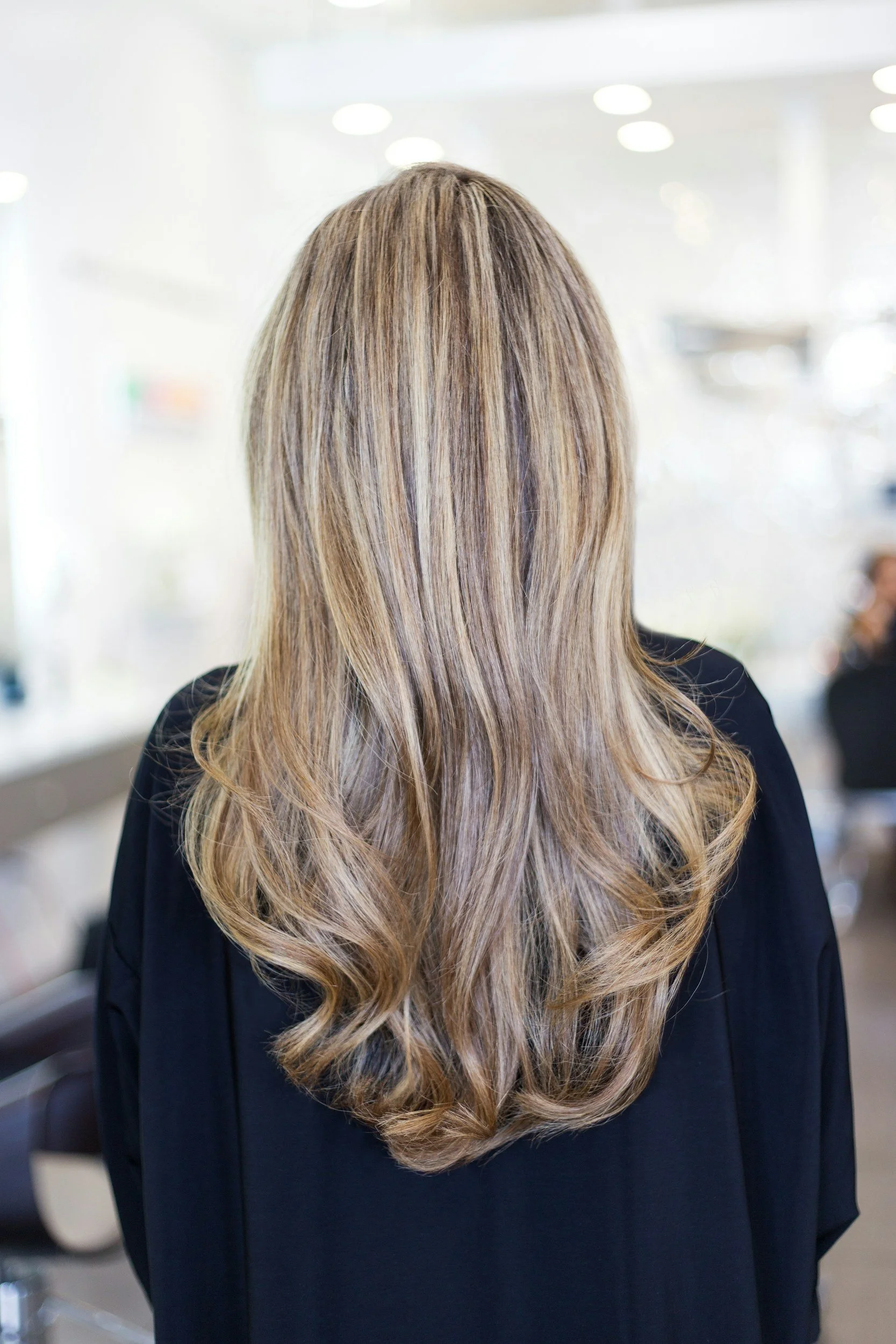
Your hair is giving you information. You deserve a clinician who takes it seriously, orders the right tests, and builds a plan with you.
Why Hair Changes in Midlife
Every hair follicle cycles through phases: a long growing phase, a brief transition, and a resting phase before the hair sheds and a new one begins. Estrogen helps keep follicles in the growing phase longer. As estrogen falls during perimenopause and menopause, more follicles slip into resting phases, and the balance tips toward the effects of androgens, which can shrink sensitive follicles over time.
That shrinking is called miniaturization. Each new hair grows back a little finer and shorter than the one before. Women often describe it this way: "I don't have bald spots. I just have less of everything."
Two Patterns, Two Different Conversations
Female pattern hair loss is the most common cause of thinning in women over 40. It develops gradually, usually as a widening part and reduced density across the top and crown, while the front hairline stays mostly in place. Family history raises your risk. It tends to progress without treatment, but it responds well to treatment that is started early and continued.
Telogen effluvium is sudden, diffuse shedding all over the scalp, often noticed as handfuls of hair in the shower or on your pillow. It typically appears two to three months after a trigger, such as an illness, surgery, a high fever, rapid weight loss, a major emotional stressor, a medication change, or a significant hormonal shift. The delay is why women rarely connect the shedding to its cause. The good news is that telogen effluvium is usually reversible once the trigger is identified and addressed.
Many midlife women have both at the same time, which is one reason a careful evaluation matters.
See a dermatologist promptly if you notice smooth bald patches, burning, pain, or significant itching of the scalp, redness or scaling, shiny or scarred-looking areas, or a hairline that is receding at the front or temples. Some forms of hair loss, including scarring types more common after menopause, can permanently destroy follicles if they are not treated early.
The Labs I Want Every Woman to Ask About
Hair loss should never be automatically blamed on menopause without looking for other causes. These are the tests I recommend discussing with your clinician:
Ferritin. This measures your stored iron. It is the test most often missed. A complete blood count can be normal while ferritin is low, because your body protects your red blood cells first and lets other tissues, like hair follicles, go without. Heavy periods in perimenopause, plant-based or restrictive eating, and digestive conditions all raise your risk. Ask for ferritin by name.
TSH (thyroid-stimulating hormone). Both an underactive and an overactive thyroid can cause shedding and changes in hair texture, and thyroid disease becomes more common as women age.
Complete blood count (CBC). This screens for anemia and other blood abnormalities.
Vitamin D. Low levels are common and are associated with several types of hair loss.
Comprehensive metabolic panel. This checks kidney and liver function, blood sugar, and electrolytes, and it is important before starting certain treatments.
Hormone testing when appropriate. If you have irregular cycles, acne, or new facial hair, your clinician may check androgens to look for an underlying hormonal condition.
One important tip: if you take biotin, alone or in a "hair, skin, and nails" formula or B-complex, tell your clinician before your blood draw. The FDA has warned that biotin can interfere with many lab tests, including thyroid tests, and cause falsely high or low results. Many labs recommend pausing biotin for a few days beforehand.
Treatments That Earn Their Place
The best treatment plan addresses both the cause and the follicle itself. Here is what has real evidence behind it.
Topical minoxidil. This is FDA-approved for female pattern hair loss and remains first-line. It extends the growing phase of the hair cycle. Expect to use it daily for at least six months before judging results, and know that a temporary increase in shedding during the first weeks is common and usually means the cycle is resetting.
Low-dose oral minoxidil. This has become widely used by hair specialists for women who find daily topical application difficult or irritating. A small randomized trial found that 1 mg of oral minoxidil produced results similar to the 5% topical solution, and a large multicenter safety study of more than 1,400 patients found side effects were generally mild. The most common is extra hair growth on the face or body. Because it was originally a blood pressure medication, it can also cause fluid retention, a faster heartbeat, or dizziness. Its use for hair is off-label, and it should only be taken under medical supervision.
Antiandrogen medications. Spironolactone and finasteride can slow female pattern hair loss by reducing the effect of androgens on the follicle. Both are used off-label for this purpose, and neither should be used if you are pregnant or could become pregnant. Spironolactone requires monitoring of potassium and blood pressure.
Low-level light therapy. Several laser caps and combs are FDA-cleared for pattern hair loss. They are a reasonable add-on for women who want a non-medication option.
Platelet-rich plasma (PRP) and microneedling. PRP uses concentrated platelets from your own blood, injected into the scalp. Studies are encouraging, but treatment protocols vary and it is usually paid out of pocket. Both PRP and microneedling work best alongside medical therapy rather than instead of it.
Hormone therapy. Menopausal hormone therapy is not prescribed to treat hair loss, and the evidence for it as a hair treatment is mixed. Some women do notice better hair quality when their menopausal symptoms are well managed. Hormone decisions should be made for your overall health, with your hair as one consideration among many.
Combining approaches usually works best. Because midlife hair loss is rarely caused by one thing, the women who see the most improvement typically correct their deficiencies, use a follicle-directed treatment such as minoxidil, and support their health with protein, strength training, sleep, and stress management.
An Honest Take on Supplements
I curated a supplement line, so you might expect me to tell you that supplements fix hair loss. I won't, because that is not what the evidence says.
Supplements help most when they correct a documented deficiency. Iron, vitamin D, and zinc all matter for healthy follicles, but more is not better. Too much iron is harmful, and excess vitamin A and selenium can actually cause hair loss. True biotin deficiency is rare, and biotin megadoses have not been shown to help most women with thinning hair.
Protein matters more than most women realize. Hair is made primarily of a protein called keratin, and midlife women often eat far less protein than they need. Aim for a meaningful source of protein at every meal.
When you do take supplements, choose products made to high quality standards, ideally with independent testing, and review everything you take with your clinician.
Black Friday and Cyber Monday: Stock Up on Your Foundations

Black Friday falls on November 27 and Cyber Monday on November 30 this year, and V-Protocol Essentials, the doctor-curated supplement line I created for women, will be offering sales for a limited time. Deals may differ from product to product, so check the website for current offers.
If you and your clinician have already decided that certain supplements belong in your routine, this is a smart time to stock up. A few that women in my practice often ask about as part of a midlife foundation:
Structura Collagen, which can help you add protein to your day. Keep in mind that collagen is not a complete protein, so it complements protein-rich meals rather than replacing them.
Ossara Vitamin D3 with K2, especially if your vitamin D level has come back low.
Serava Magnesium, which many women use as part of their sleep and stress routine, since poor sleep and chronic stress take a toll on the whole body, hair included.
Luminara Omega-3 and our V-Protocol bundles, for women who prefer a simplified, all-in-one approach.
Please remember that supplements are not a substitute for a medical evaluation. If you are losing hair, get your labs checked first, so you know exactly what your body needs.
These statements have not been evaluated by the Food and Drug Administration. These products are not intended to diagnose, treat, cure, or prevent any disease.
Patience Is Part of the Prescription
Hair grows about half an inch a month, and follicles take months to respond to any change. Most treatments need three to six months before you notice a difference, and closer to a year for the full effect. Take photos of your part and crown in the same lighting once a month, so you can see progress your mirror might miss.
Your hair is giving you information. You deserve a clinician who takes it seriously, orders the right tests, and builds a plan with you. If your concerns are brushed aside, keep advocating for yourself until you find that provider.
Defy Menopause - Own the Change
Many women tell me: "One day I feel amazing. The next, I can barely get out of bed. Is this normal?"
Yes, it is. And no, you don’t have to suffer through it alone.
Hormonal fluctuations during perimenopause can make you feel like you’ve lost control of your body. But knowledge is powerful. And there are clear, science-backed ways to support your hormones, ease symptoms, and reclaim your energy.
That’s exactly why I created Defy Menopause: Own the Change — a 30-day program designed to give you the tools, knowledge, and support you need to move through these changes with clarity and confidence.
Inside, you’ll find:
Access to Dr. Tracy Verrico at one (1) live, group session
Clear action steps for managing symptoms naturally
Because you deserve more than just "putting up with it."
You deserve to thrive.
Let’s Connect
Schedule an Appointment | LinkedIn | YouTube | Instagram | Bona Dea Gynecology
Medical Disclaimer: The information provided in this blog is for general educational and informational purposes only and is not intended as, nor should it be considered, medical advice. This content does not establish a physician-patient relationship and is not a substitute for professional medical advice, diagnosis, or treatment. Always seek the advice of your physician or other qualified healthcare provider with any questions you may have regarding a medical condition. Never disregard professional medical advice or delay seeking it because of something you have read in this newsletter. If you think you may have a medical emergency, call your doctor or emergency services immediately.
References
Vujovic A, Del Marmol V. The female pattern hair loss: review of etiopathogenesis and diagnosis. Biomed Res Int. 2014;2014:767628.
van Zuuren EJ, Fedorowicz Z, Schoones J. Interventions for female pattern hair loss. Cochrane Database Syst Rev. 2016;(5):CD007628.
Trost LB, Bergfeld WF, Calogeras E. The diagnosis and treatment of iron deficiency and its potential relationship to hair loss. J Am Acad Dermatol. 2006;54(5):824-844.
Almohanna HM, Ahmed AA, Tsatalis JP, Tosti A. The Role of Vitamins and Minerals in Hair Loss: A Review. Dermatol Ther (Heidelb). 2019;9(1):51-70.
Ramos PM, Sinclair RD, Kasprzak M, Miot HA. Minoxidil 1 mg oral versus minoxidil 5% topical solution for the treatment of female-pattern hair loss: a randomized clinical trial. J Am Acad Dermatol. 2020;82(1):252-253.
Vano-Galvan S, Pirmez R, Hermosa-Gelbard A, et al. Safety of low-dose oral minoxidil for hair loss: a multicenter study of 1404 patients. J Am Acad Dermatol. 2021;84(6):1644-1651.
U.S. Food and Drug Administration. Biotin (Vitamin B7): Safety Communication - May Interfere with Lab Tests. 2017, updated 2019.
The 2022 Hormone Therapy Position Statement of The North American Menopause Society. Menopause. 2022;29(7):767-794.